Summary
Semrush lets you see which keywords your competitors rank for, which pages bring them the most traffic, and where their gaps are. It is enormous and very easy to get lost in. This guide focuses only on the three things worth doing first as a complete beginner to SEO tools.
Introduction
Imagine being able to see which keywords your competitor ranks for, which of their pages drives the most traffic, what they are spending on paid ads, and where the gaps are in their content strategy. Without hacking anything. Without guessing. Just by using a tool built specifically to estimate this.
That is what Semrush does, and it is why marketers use it obsessively once they discover it.
The problem is that Semrush is enormous. It has dozens of tools inside tools, reports inside reports, and data points that multiply endlessly the more you look. Beginners open it, get completely overwhelmed, and either pay for a subscription they do not know how to use or give up entirely.
This guide ignores almost everything in Semrush and focuses on the small number of features that deliver real value when you are starting out in digital marketing and SEO.
What Semrush Is
Semrush is an all-in-one digital marketing platform that provides data about how websites perform in search, what keywords they rank for, where their traffic comes from, and how they advertise. It combines SEO tools, competitor research, content marketing analysis, and paid advertising intelligence in one platform.
The data it provides is estimated rather than exact, because Semrush does not have access to the internal analytics of other websites. It uses its own database of crawled content and search data to make educated estimates. Those estimates are good enough to inform strategy but should not be treated as precise truth.
Semrush has a free tier and a paid subscription. The free tier limits how many searches you can run per day but is more than enough for learning the basics.
The Three Things Worth Doing First
Run a Domain Overview on a Competitor
This is the fastest way to understand what is working for a competitor in search.
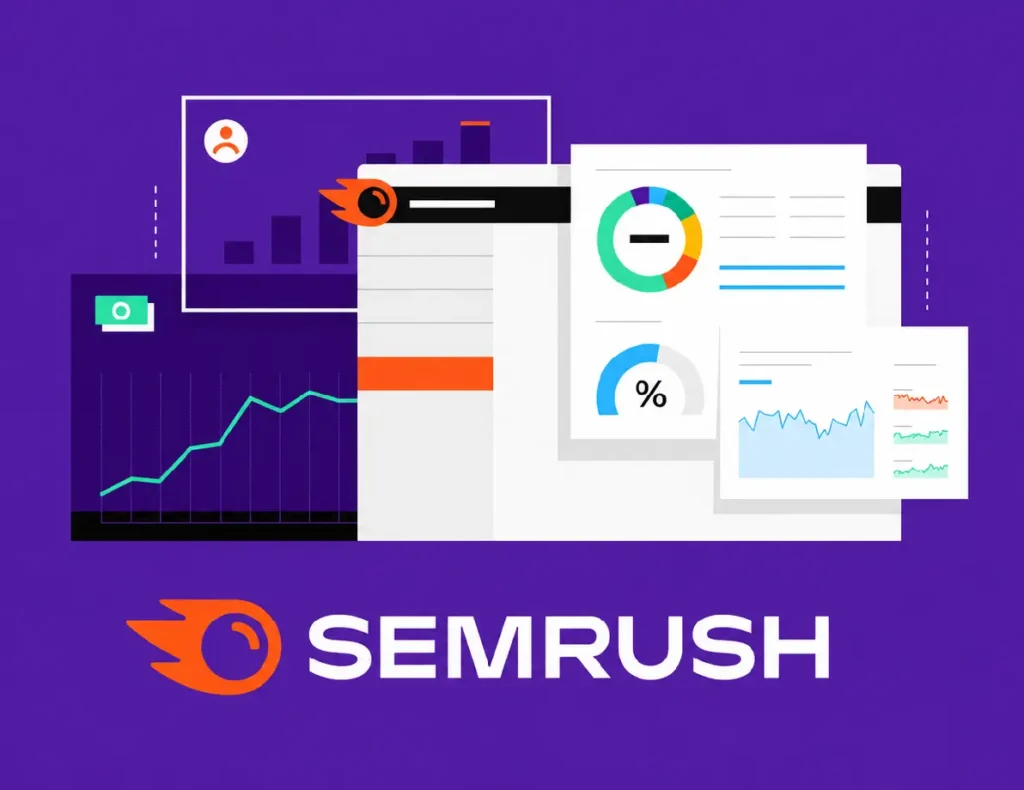
Type your competitor’s website URL into Semrush’s search bar and select Domain Overview. Semrush will show you an estimate of their monthly organic traffic, the number of keywords they rank for, their top-ranking pages, and the keywords driving the most traffic to those pages.
This overview tells you several things at once. You can see which topics they have built authority in. You can see which pages are their best performers. And you can begin to understand the structure of their content strategy without having to reverse-engineer it manually.
Look at their top pages specifically. These are the pages Semrush estimates drive the most traffic. Ask yourself why these pages rank well. Is it because the topic has high search volume and they have written the most comprehensive piece about it? Is it because they have earned a lot of links to that page? Is it a topic that your own website covers poorly or not at all?
Do Proper Keyword Research
Before Semrush, keyword research for most beginners meant typing ideas into a search bar and guessing. Semrush makes it significantly more rigorous.
Type a topic related to your business or content into the Keyword Magic Tool. Semrush will show you related keywords, the estimated monthly search volume for each, how difficult it would be to rank for each keyword, and what kind of content is currently ranking.
The number to pay most attention to as a beginner is keyword difficulty. High volume keywords with high difficulty are dominated by large websites with enormous authority. Trying to compete for these as a new or small site is a slow and frustrating process.
The sweet spot is keywords with decent search volume and lower difficulty. These are often longer, more specific phrases that larger competitors have ignored because the volume is not high enough to be worth their attention. For a smaller site, ranking for ten such keywords is far more achievable and can generate meaningful traffic.
Find Your Competitors’ Best Content
Go to the Organic Research section and enter a competitor’s domain. Sort their pages by traffic. Look at what their top ten pages are about.
If a specific topic or type of content is driving significant traffic for one competitor, there is a strong chance the same topic is valuable in your space. The question then becomes whether you can create something more thorough, more useful, or better structured than what already exists.
This is not about copying. It is about understanding where the demand already exists and deciding whether you can serve it better.
The Trap That Catches Most Beginners
Semrush presents its estimates with confidence. The numbers look precise. Beginners treat them as exact facts and make decisions accordingly.
They are informed estimates, not ground truth. The actual traffic a competitor receives might be significantly higher or lower than what Semrush shows. The keyword difficulty scores are useful comparisons but not precise measurements.
Use Semrush to identify patterns and opportunities, then apply your own judgment about what is actually worth pursuing. The tool points you toward doors. Deciding which ones to walk through, and whether the effort required to open them is worth it, is still entirely your call.